

Steam Deck looks great, but Valve’s hardware track record doesn’t
Steam Deck looks great, simply Valve'south hardware track record doesn't
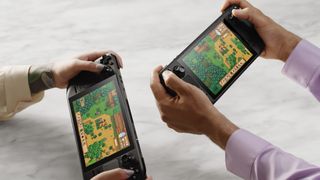
Last week, Valve revealed Steam Deck: a handheld PC that looks like a NIntendo Switch, just packs equally much power as a decent gaming laptop. Pre-orders for the Steam Deck went live on Fri (July xvi), and hordes of eager fans nearly crashed Valve's servers. This December, PC gamers will have a chance to play their favorite titles in a handheld format — no deject gaming, local streaming or compromised console ports required.
While Steam Deck sounds interesting, I've adopted a await-and-run into approach regarding Valve's inventive new device. Role of the reason is that I recall at that place's still a pretty clear separation betwixt games that are optimized for a handheld, and games that are optimized for a big screen, the Nintendo Switch all the same.
- Play the best free PC games
- Steam Deck is an oddball gaming machine — and I love it
- Plus: How to check if a Steam game works on Steam Deck
The other reason for my caution, of form, is because I've observed Valve's arroyo to hardware over the past few years, and the company has stumbled merely as frequently as it's succeeded. Since I've started working at Tom's Guide, Valve has attempted three major hardware initiatives: the Steam Controller, the Steam Link and Steam Machines. The first ii came and went; the last 1 barely materialized at all.
While the road to success is paved with failure in the gaming industry as much equally anywhere else, I still wonder whether Valve will deliver a revolutionary handheld console or abandon the Steam Deck project if it's not perfect out of the gate.
Steam Controller and Steam Link
For context, let'due south look at Valve's hardware initiatives up to this indicate, and how each one played out.
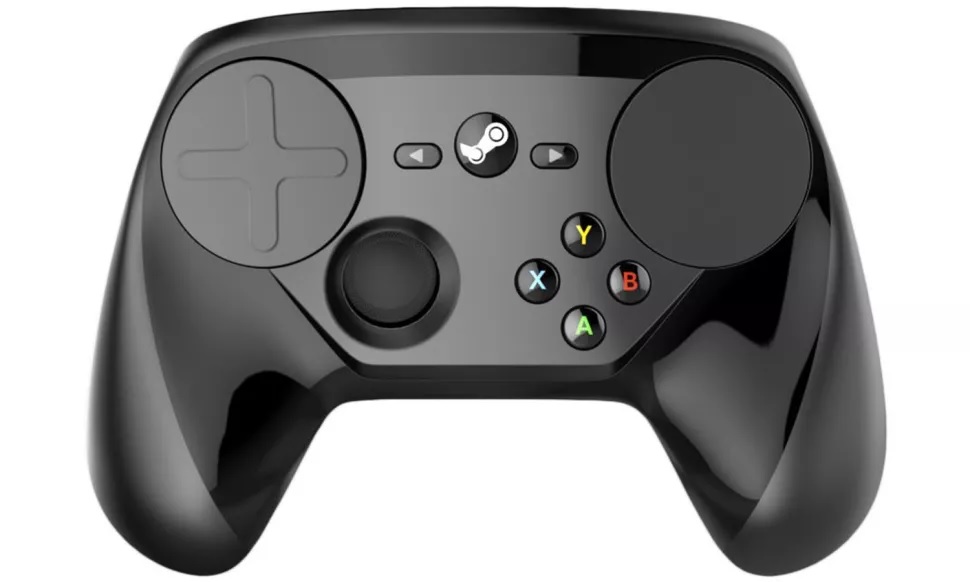
First, there was the Steam Controller, which debuted in 2015. I reviewed the inventive peripheral when information technology came out, giving it a mixed score:
"While the Steam Controller can fairly replace a traditional controller, a mouse and a keyboard all at the same fourth dimension, it doesn't fill any of the functions of those devices particularly well," I wrote at the fourth dimension. "The impromptu mouse pad feels imprecise; there aren't enough buttons to supercede a full-fledged keyboard, and it seems to introduce a limitation to just about every genre that wasn't there before."
For those who never tried 1, the Steam Controller was a big peripheral, intended to work with SteamOS, and to work in identify of a traditional controller, mouse and keyboard all at once. It was an ambitious thought, and like many aggressive ideas, it didn't fully work. Still, the amount of customization it offered was incredible, and a small but dedicated community of fans still laments the demise of that product to this solar day.
The problem wasn't that the Steam Controller was imperfect; it was that Valve released it to middling fanfare, didn't do much with it, and quietly allow it disappear. A 2nd version could have ironed out a lot of problems present in the first.
Steam Link, which also came out in 2015, was another ahead-of-its-time pace toward streaming PC games. Past hooking this small box up to their TVs, gamers could stream their Steam libraries to a big screen, successfully bridging the gap between PC and living-room gaming. The device cost only $50 — much cheaper than buying a second gaming PC.
To be fair, Steam Link functionality still exists, as you can go it on Android phones or plan it into a Raspberry Pi. Simply the Steam Link hardware was some other perfect instance of Valve producing a perfectly feasible piece of tech, and so seemingly losing interest in information technology and abandoning it, simply when it could take been nigh useful. Retrieve nigh how many cloud gaming headaches a full-featured Steam Link could accept solved, years before Google Stadia or Xbox Cloud Gaming even existed.
Steam Machines
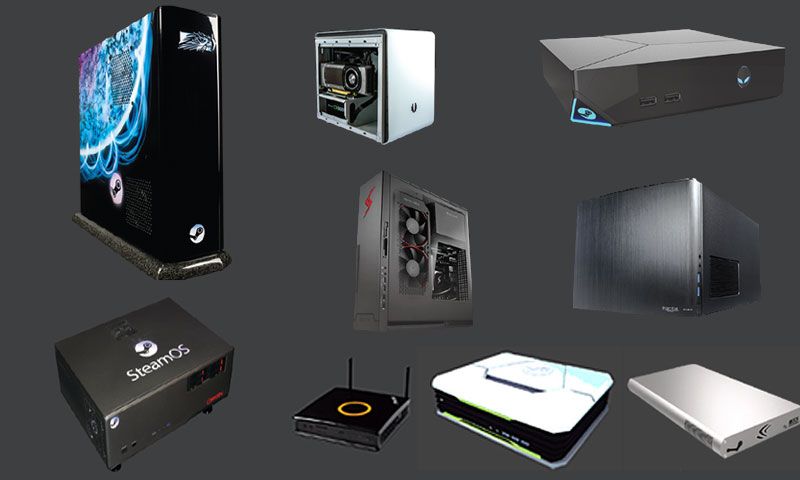
However, Valve's biggest hardware misstep came in the form of Steam Machines. This promising idea surfaced in 2014, when Valve appear that it would partner with a multifariousness of gaming PC manufacturers to make its own line of gaming rigs. Each Steam auto would come preinstalled with SteamOS, and would run the gamut from top-of-the-line gaming PCs, to small-course living room fare.
Valve made a big to-exercise about Steam Machines before they launched, and got major manufacturers like Alienware and iBuyPower onboard to piece of work their magic. However, every bit the Steam Machines' release dates grew nearer and nearer, Valve said less and less about the machines. In the end, very few Steam Machines actually came out, and almost no one bought them. Valve stopped discussing them entirely.
Between the Steam Controller, Steam Link, and Steam Machines, we can see a consistent pattern with Valve's hardware plans. The company announces an ambitious device; the device comes out; the device gets a mixed (or negative) reaction; Valve quietly lets the product die.
There's no guarantee that Steam Deck volition follow suit, of course. Only of Valve's previous efforts, Steam Deck is about similar to Steam Machines, right downwards to the SteamOS interface (and the possible Linux-related limitations that come up forth with it). Valve's previous foray into gaming computers ended poorly. If the visitor wants to unmarried-handedly make handheld gaming PCs mainstream, Steam Deck will demand to be a technical success, a critical darling, or a popular fan-favorite. Then far, none of Valve's hardware has succeeded on more than 1 of those counts.
Steam Deck outlook
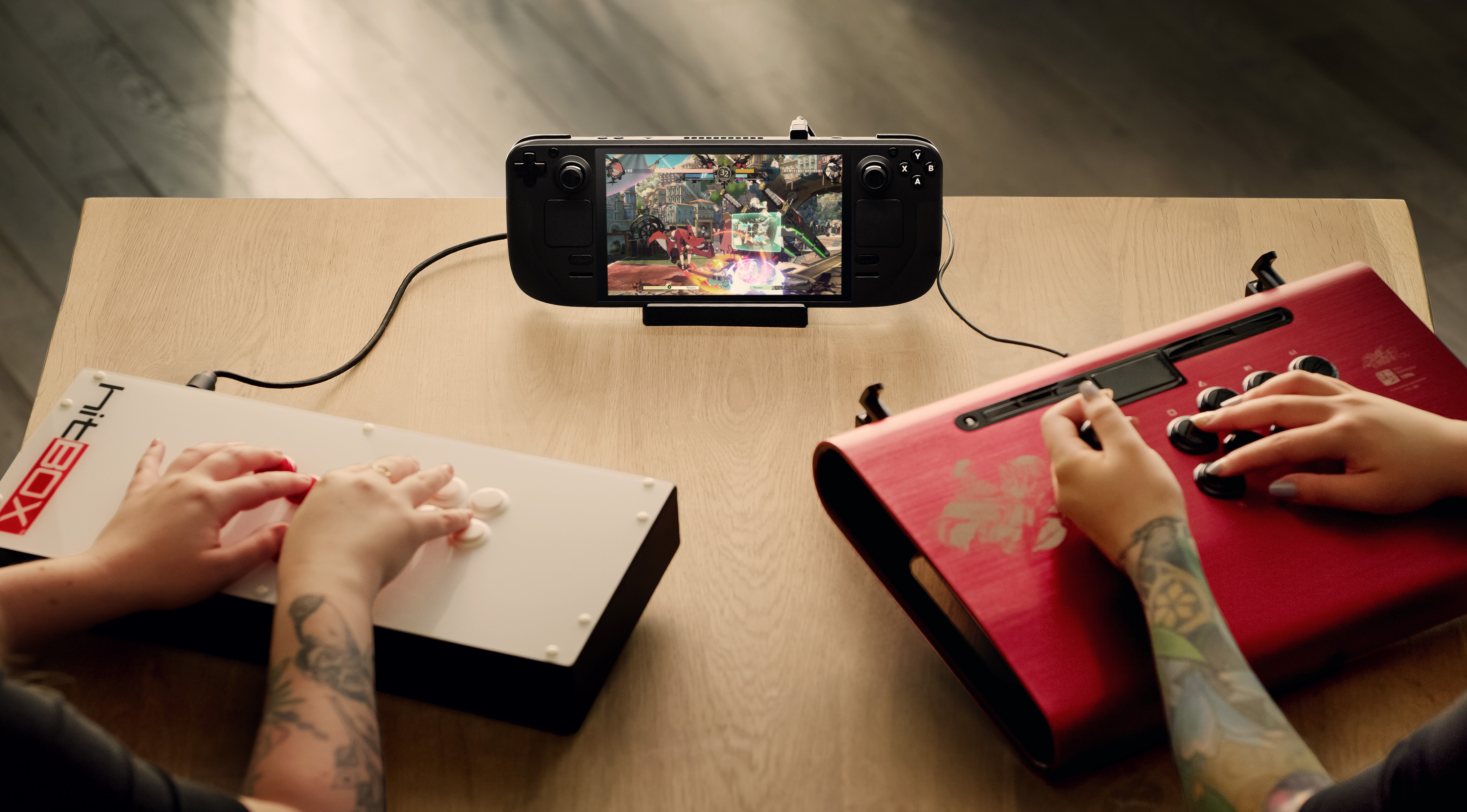
Then over again, Steam Deck is still half-a-year away, and I don't have any special insight into how well information technology might work, or sell. If pre-orders are any indication, gamers seem much more excited near Steam Deck than the Controller or the Link. Furthermore, a handheld gaming PC is something people have been clamoring for; I don't know if I tin say the same virtually a SteamOS-optimized controller.
For gamers who admittedly, positively must accept a Steam Deck, I wish yous skillful luck with the pre-order meshugas. Nonetheless, waiting for reviews in this case might be the wiser motion. Valve may very well have a striking on its hands — but many fans thought the aforementioned thing back in 2014.

Source: https://www.tomsguide.com/news/steam-deck-valve-hardware
Posted by: ortizbletismue.blogspot.com
0 Response to "Steam Deck looks great, but Valve’s hardware track record doesn’t"
Post a Comment